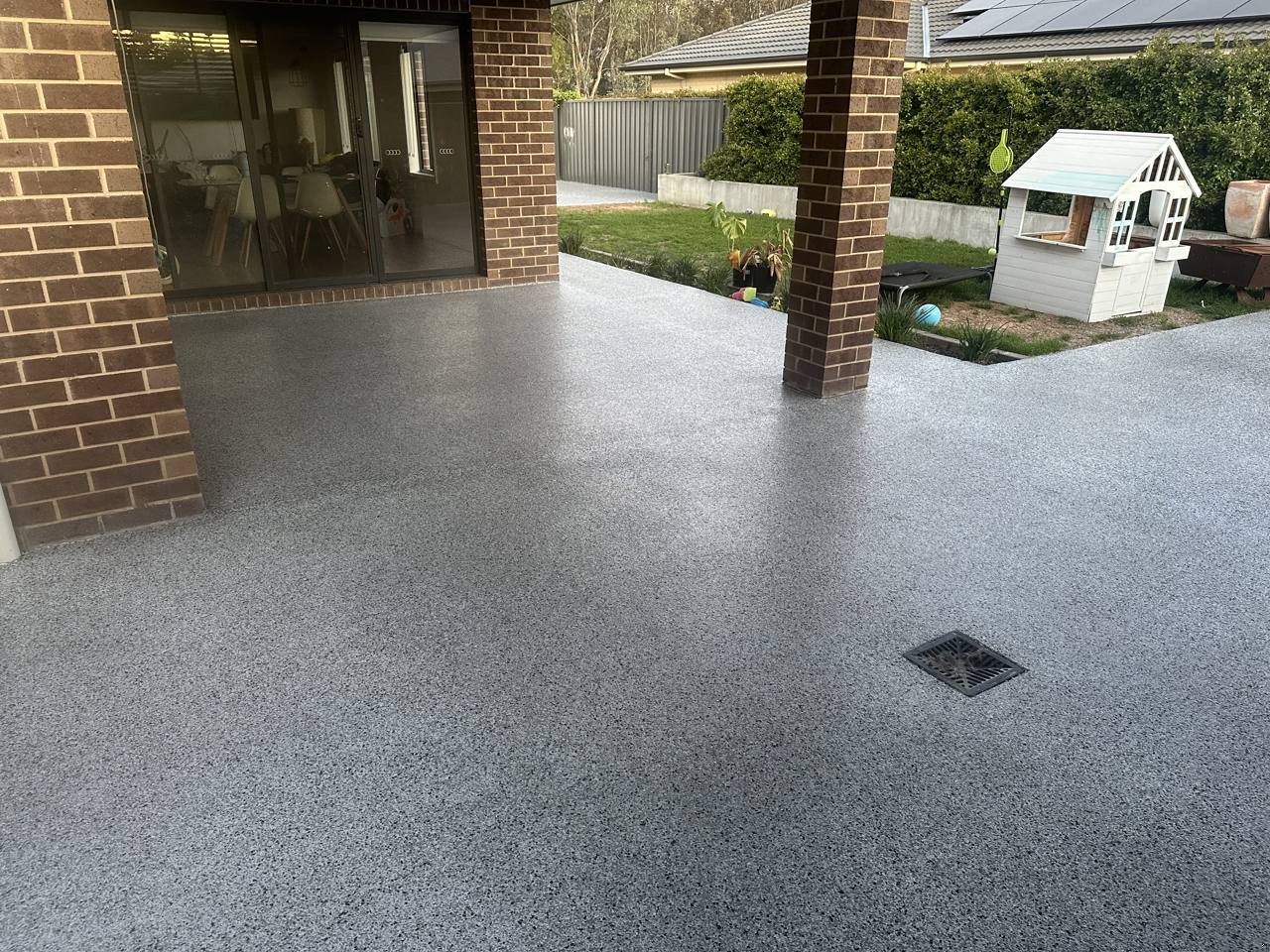
If you’ve scrolled a renovation feed lately, you’ve probably seen it: a bathroom or kitchen with no grout lines at all, just one soft, tonal surface running from floor to wall to shower base. That’s microcement, and it’s one of the most-asked-about finishes we’re getting enquiries for around Albury, Wodonga and the border region. Here’s what it actually is, where it works, and what to get right before you commit.
What microcement actually is
Microcement is an ultra-thin, hand-trowelled cement-based coating — typically only a couple of millimetres thick — applied in layers over an existing surface. Unlike a full polished concrete floor, which is ground back from the slab itself, microcement sits on top of what’s already there. That’s a big part of the appeal: it can go over old tiles in a bathroom renovation without ripping anything up, which saves time, mess and cost compared with a full strip-out.
The finish is seamless and grout-free, with a soft, slightly tactile texture rather than a hard gloss. It comes in a range of tones — warm greys, greiges and earthy neutrals are the most requested at the moment — and because it’s hand-applied, every floor has a bit of natural variation rather than looking machine-made.
Where it works best
Bathrooms and wet areas
This is where most of the current interest is coming from. A microcement floor can run straight into a curbless shower with no step or trim, which is both a clean look and genuinely easier to clean. The important detail: microcement itself is water-resistant, not waterproof. In a wet area, a proper waterproofing membrane goes down first, and the microcement and sealer sit on top of that system — skip the membrane and you’re asking for trouble down the track, no matter how good the surface looks.
Kitchens, living areas and benchtops
Outside wet areas, microcement is popular for kitchen floors, hallways and open living spaces where people want the polished-concrete look without a full grind-and-polish job — especially useful on an existing slab or over tiles that aren’t worth demolishing. It also turns up on benchtops and splashbacks for a continuous, seamless look.
How it compares to polished concrete
Both finishes land in the same “seamless, modern, no grout” family, but they’re built differently. Polished concrete is mechanical — ground and honed back from the slab, with no coating sitting on top, so there’s nothing to wear through. Microcement is an applied coating, so its long-term performance comes down to the sealer and the prep underneath, not the slab itself. If you’re weighing the two up for a floor (rather than a bathroom reno over tiles), our guide to flake vs polished concrete covers how we think about picking the right seamless finish for a space.
What has to be right for it to last
The substrate underneath
Microcement is only as stable as what’s beneath it. A sound, well-prepared substrate is essential — if the existing surface is moving, cracked or poorly bonded, that movement can telegraph through to the microcement over time. This is the single biggest factor separating a floor that lasts from one that doesn’t, and it’s exactly why we check the substrate properly before quoting rather than just coating over whatever’s there.
The sealer is a wear item
The topcoat sealer is what gives microcement its stain and moisture resistance, and like any sealer it wears with traffic and time. Busy areas — a family bathroom, a kitchen floor — will need it refreshed well before a quiet guest powder room does. That’s normal, and it’s a straightforward job, not a sign anything’s gone wrong.
Living with it
Day to day, microcement is low-fuss: a soft mop and a pH-neutral cleaner is all it needs. Avoid abrasive scrubbers, bleach and acidic cleaners, which can dull the sealer faster than normal wear would. Keep grit off it where you can — the sealer is softer than a full polished-concrete finish, so dragged furniture or gritty shoes will mark it quicker than a ground floor.
Is it right for your space?
Microcement is a great option when you want a seamless, modern finish without a full demolition — particularly for bathroom and kitchen renovations where ripping up tiles isn’t practical. It’s not the pick for a garage, a driveway or anywhere that sees trolleys, hot tyres or heavy abrasion — that’s what our microcement & honed concrete work is scoped around, and we’ll tell you plainly if your space is better suited to a different finish. Get in touch for a free, honest assessment of what will actually work for your room.