A floor is only a good buy if it lasts. So before you spend on an epoxy flake system, it’s fair to ask: how many years will it actually give you? Here’s the honest answer, based on what we see on real slabs around Albury, Wodonga and the border region.
The short version
A professionally installed flake floor — properly ground, primed, broadcast to full coverage and sealed with a quality top coat — is a 10 to 20 year surface in a typical home garage or alfresco area. Commercial spaces with forklifts, trolleys and constant foot traffic sit closer to the 10–15 year mark. Compare that with paint-style garage coatings, which often start peeling within a couple of years, and the difference is stark.
The catch: those numbers assume the floor was done right in the first place. The lifespan of a flake floor is decided on day one, not year ten.
What actually decides the lifespan
1. Preparation, preparation, preparation
When a coating fails early, it almost never “wears out” — it lets go of the slab. Diamond grinding opens the concrete so the primer keys in mechanically; skipping it (or acid-etching instead, as most DIY kits do) is the number-one cause of peeling. If the prep is right, the coating becomes part of the slab rather than a skin sitting on top of it.
2. The top coat
The flakes themselves are protected by the clear coat over them, so that’s the layer that takes the punishment. A UV-stable polyaspartic top coat resists yellowing, hot tyre pick-up and scratching far better than a basic epoxy clear — it’s the single best upgrade for garages that get afternoon sun or cars parked hot.
3. What the floor has to live with
Hot tyres, dragged steel furniture, jack stands on bare points, and harsh solvents are the main enemies. None of them are deal-breakers — a small square of ply under a jack, felt pads under steel legs and wiping up fuel or degreaser spills promptly is all it takes.
Looking after it (it’s not much)
One of the reasons people love flake floors is how little they ask of you:
Day to day
Dust with a soft broom or blower. The textured surface hides dust well anyway — that’s half the appeal.
Every few weeks
Mop with warm water and a pH-neutral cleaner. Avoid bleach, ammonia and citrus strippers — they dull the clear coat over time. No waxing, no sealing schedule, no scrubbing grout lines.
Outdoors
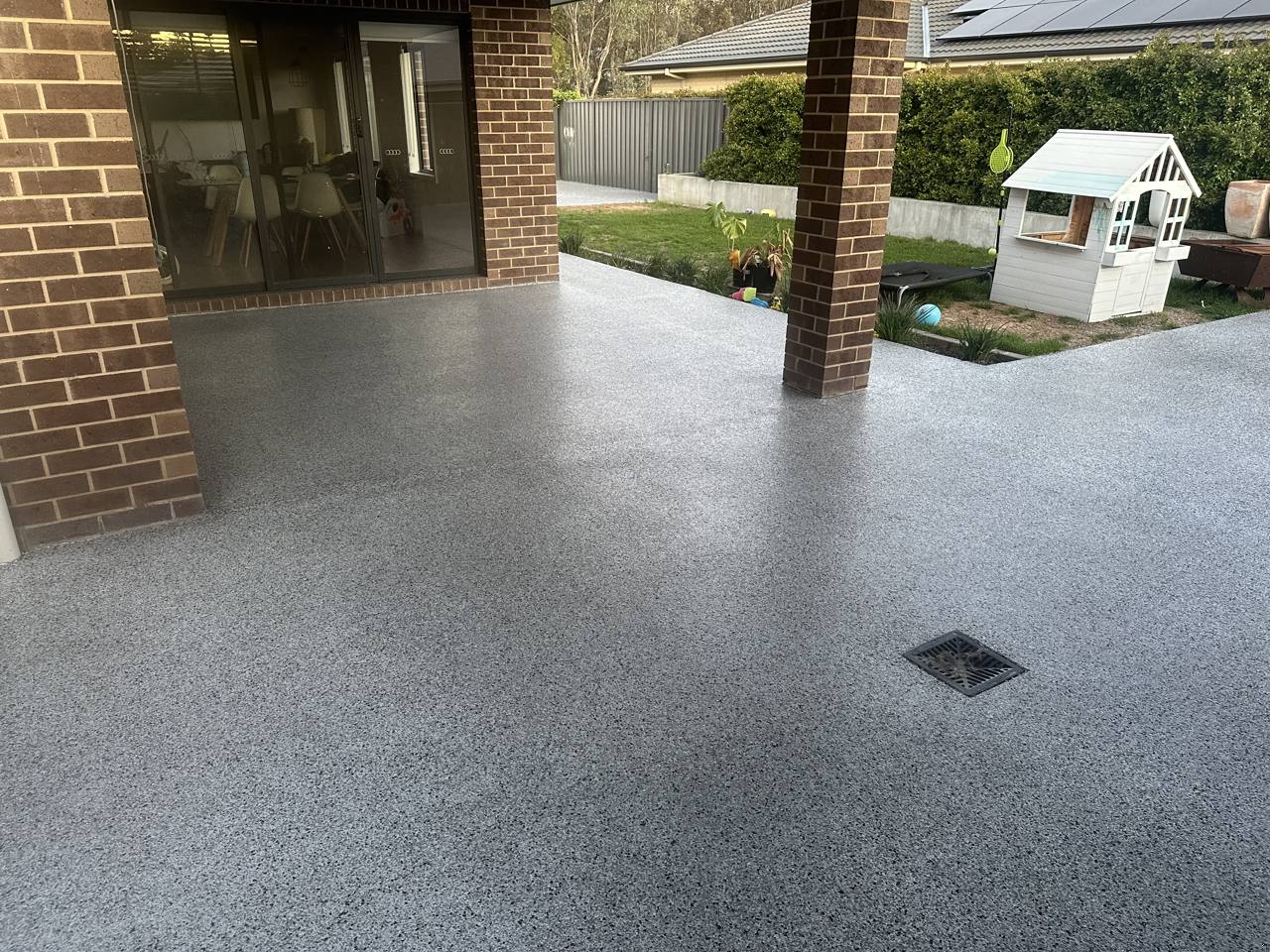
Alfresco and patio flake floors just need a hose-off. The UV-stable top coat is what keeps an outdoor floor from chalking — another reason not to cut corners on the clear.
When it does get tired: re-coat, don’t replace
Here’s the part most people don’t know: when a well-bonded flake floor finally loses its gloss after many years of traffic, it usually doesn’t need to be redone. The surface can be lightly abraded and a fresh clear coat applied over the existing flakes — a fraction of the cost of a new floor, and it comes up looking new. That only works if the original system bonded properly, which brings us back to prep.
The bottom line
Done properly, an epoxy flake floor is one of the longest-lived finishes you can put on concrete — and one of the lowest-maintenance. Done cheaply, it’s a two-year skin. If you’re weighing it up, our guide to what a flake floor costs locally covers the numbers, and you can try colours on real rooms with our flake colour visualiser.
Want a straight answer on your slab? Ask us for a free on-site quote — we’ll tell you honestly what it needs and what it doesn’t.